
Ideas on product, GTM, and leading through pressure.
 Series · 3 posts
The Implementation Gap
Latest: Scoping Before You Staff: Stopping Scope Creep Before It Starts
View all 3 postsHide posts
The Implementation Gap
Latest: Scoping Before You Staff: Stopping Scope Creep Before It Starts
View all 3 postsHide posts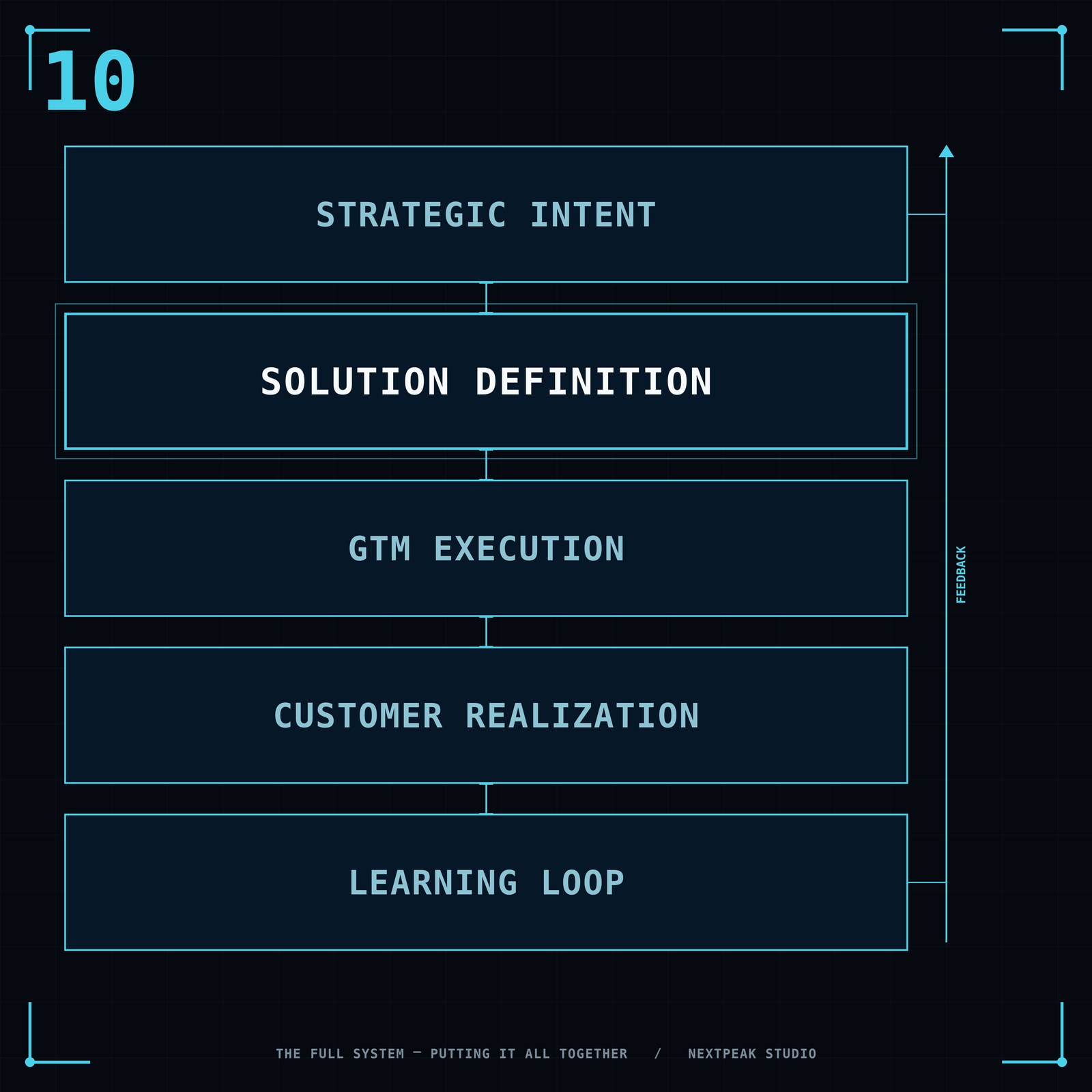 Series · 10 posts
The Customer Solution Brief
Latest: The Full System: Putting It All Together
View all 10 postsHide posts
The Customer Solution Brief
Latest: The Full System: Putting It All Together
View all 10 postsHide posts Series · 5 posts
When Strategy Doesn't Travel
Latest: What Becomes Possible When the Position Exists
View all 5 postsHide posts
When Strategy Doesn't Travel
Latest: What Becomes Possible When the Position Exists
View all 5 postsHide posts Series · 6 posts
Where Pressure Ultimately Lands
Latest: Where Pressure Ultimately Lands
View all 6 postsHide posts
Where Pressure Ultimately Lands
Latest: Where Pressure Ultimately Lands
View all 6 postsHide posts Series · 5 posts
Under Pressure
Latest: What Actually Holds When Organizations Operate Under Pressure
View all 5 postsHide posts
Under Pressure
Latest: What Actually Holds When Organizations Operate Under Pressure
View all 5 postsHide posts Series · 2 posts
TAM
Latest: A Practical TAM Framework Product Leaders Can Actually Use
View all 2 postsHide posts
TAM
Latest: A Practical TAM Framework Product Leaders Can Actually Use
View all 2 postsHide posts
Why Leadership Teams Bring in External Help to Make Change Stick
Leadership teams rarely struggle to identify what needs to change. The challenge shows up when they try to create sustained momentum while managing daily execution pressure.

Making OKRs Operational: How Leaders Sustain Alignment During Execution
OKRs often break during execution. Learn how executive teams use cadence, reviews, and leadership behavior to sustain alignment and keep OKRs working under pressure.
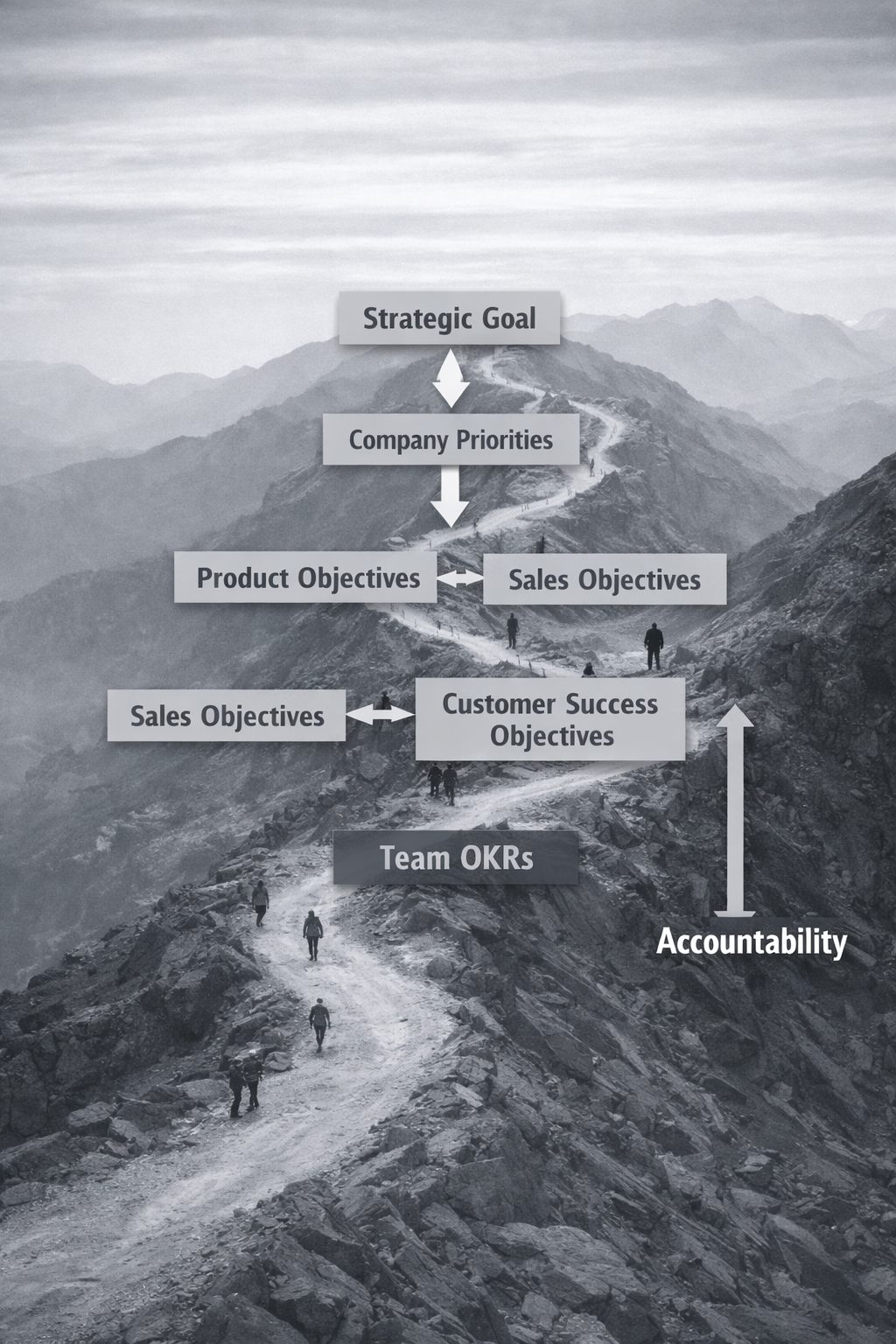
OKRs as an Alignment System, Not a Goal-Setting Exercise
Most OKR systems fail because they are treated as a goal-setting exercise. This second post in the alignment series explains how effective OKRs connect strategic intent to daily execution instead.

OKRs as a Product Alignment Tool
Most organizations struggle with product execution not from lack of effort but because alignment breaks as work moves from strategy to delivery. Here's how strong product organizations use OKRs to turn strategy into execution.
 Series · 4 posts
Three Horizons
Latest: Measuring Portfolio Health and Strategic Success
View all 4 postsHide posts
Three Horizons
Latest: Measuring Portfolio Health and Strategic Success
View all 4 postsHide posts
Want Your New Team or Leader to Succeed? Start with Clarity.
New teams and leaders rarely fail because of talent. They fail because no one agrees on why the team exists or how it plugs into the rest of the system. Here's a framework for turning ambiguity into alignment from day one.

Turning Customer Success Into a Discovery Engine
Customer Success sits closer to the customer than anyone else in the company. Here's how to give them the structure, skills, and recognition to turn daily interactions into actionable product insight.

Deep Dive: When Curiosity Becomes Compliance (aka How Great Product Teams Lose Their Nerve)
When uncertainty hits, product teams get reactive and start following the product instead of steering it. Here's how to rebuild the conviction that great product leadership requires.

From Features to Focus: Getting Back to Why We Started
Product teams don't set out to become feature factories, it happens slowly. Here's how teams reconnect roadmap work to real user problems and reclaim purpose.

How to Sequence Tech Debt vs. New Features
Tech debt and new features aren't competing priorities, they're interdependent. Here's how to sequence them so customer value and long-term scalability both hold.

Turning Sales Losses Into Roadmap Opportunities
Sales objections are one of the most underutilized sources of product insight. With the right structure, lost deals can sharpen messaging, reveal competitive gaps, and inform roadmap bets.
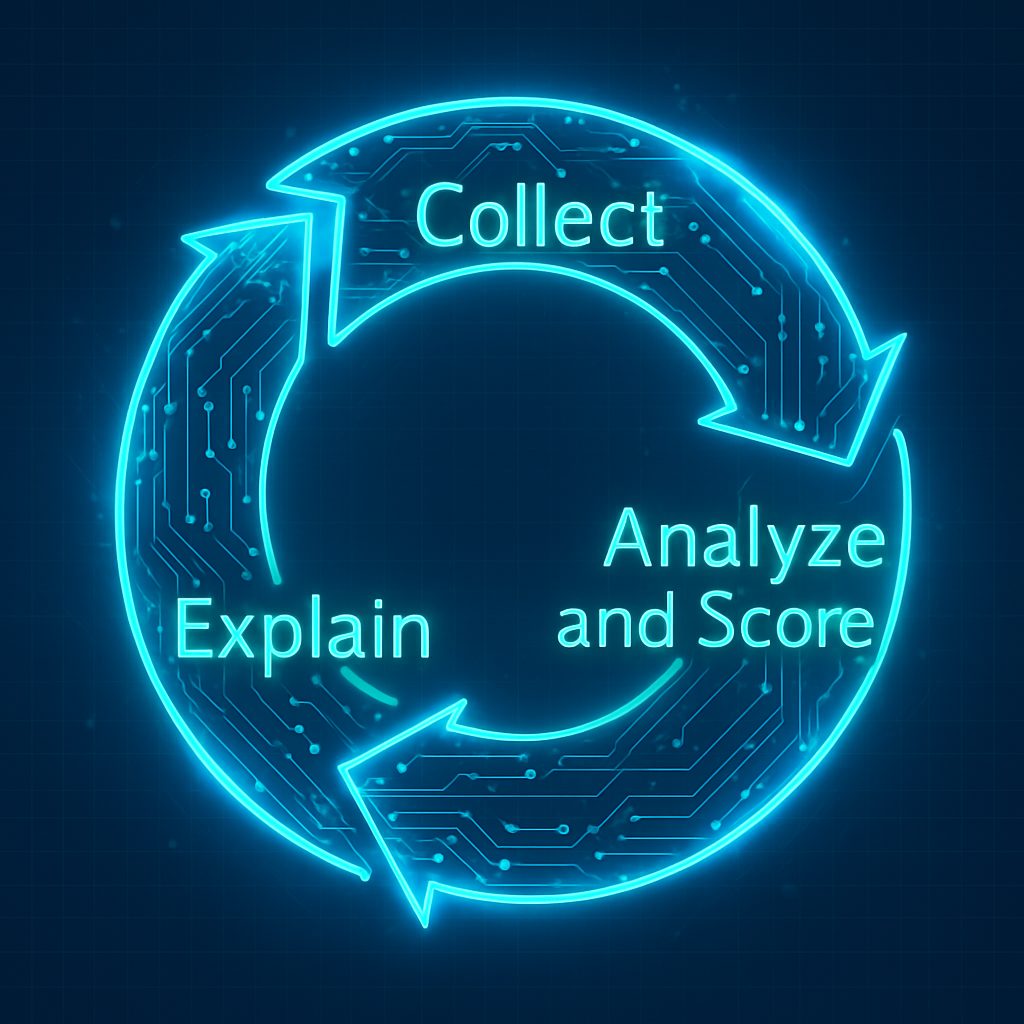
Creating Feedback Loops Without Derailing the Roadmap
Structured feedback loops let product teams capture input from sales, customer success, and executives without letting the loudest voice dictate strategy.

One Strategy, Two Roadmaps: Building the Foundation for High-Velocity Product Delivery
Aligning product and engineering roadmaps around a shared strategy builds trust across the organization, turning engineering from a perceived cost center into a growth engine.

The CPO-CTO Alliance: Why This Partnership Makes or Breaks Scale-Ups
The health of the CPO-CTO relationship is a leading indicator of scale-up performance. Here are the pillars that separate partnerships that compound advantage from those that stall execution.