The Customer Solution Brief (Post 6 of 10)
There is a version of the enterprise software demo that every experienced sales leader has watched happen and cringed at: the feature tour. The rep opens the product, walks through the interface section by section, points to capabilities, names functions, and waits for the prospect to connect the dots between what they’re seeing and the problem they came in with. The features are real. The product is good. But nothing in the demo is organized around the customer’s world, and by the end of it, the prospect is politely engaged but not moved.
The reason this happens is almost never that the rep doesn’t know the product. More often the rep is running a generic demo because there’s no real alternative: a demo organized around the specific value pattern for this customer type requires a defined value pattern to build from in the first place. Without the brief, the rep improvises. Some reps improvise brilliantly, many improvise adequately, and a few improvise poorly, and that variance gets accepted as normal when it’s actually structural.
The Customer Solution Brief won’t make every demo brilliant, but it raises the floor, giving every rep who engages with it a pattern to sell from that reflects the company’s best understanding of how value is created for this customer type.
Discovery That Starts with the Brief
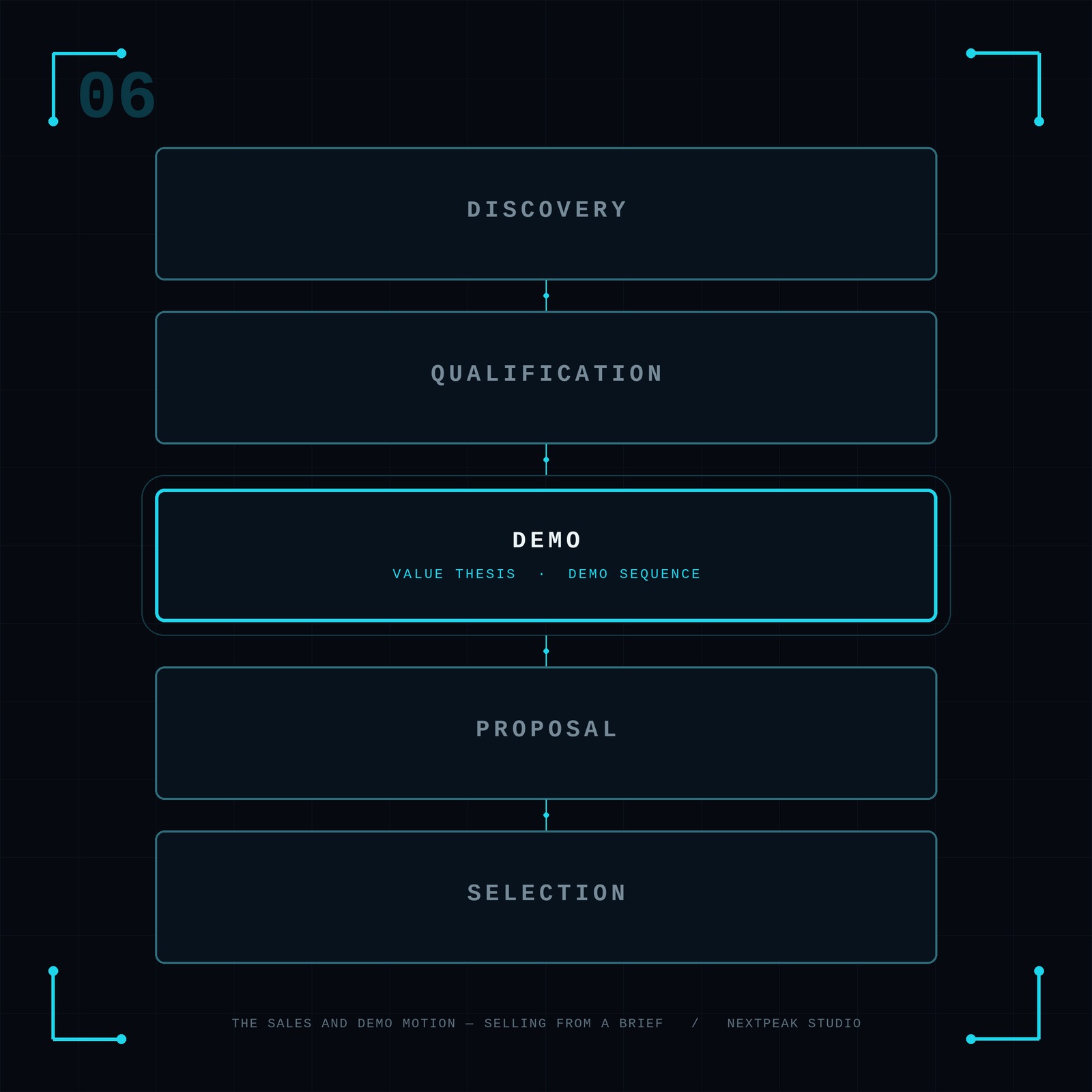
The first place the brief changes the sales motion is in discovery. Most companies train their reps on a discovery framework, whether that’s MEDDIC, SPIN, or a custom methodology, that teaches them how to ask questions and qualify opportunities. What those frameworks tend to leave out is customer-type-specific guidance on what to listen for and what it means.
The brief’s customer type definition and core problem section give the rep a specific picture of what a customer who fits this type should look, sound, and feel like in a discovery conversation. The quality director at a medical device company who is talking about audit preparation and document control is signaling fit. The same title at a company that hasn’t mentioned those things in twenty minutes of conversation may be a different customer type or may not be a fit at all.
That doesn’t mean reps are reading from a script. It sharpens the pattern recognition that good discovery depends on, so reps who internalize the customer type definition stop asking generic qualification questions and start listening for the specific signals that distinguish a strong fit from a moderate one. The conversations get faster and more useful on both sides.
The Demo Organized Around the Value Thesis
The demo is where the brief’s impact on the sales motion is most immediately visible. When the brief is operational, the demo for each customer type is built around the value thesis for that type, the specific mechanism by which the product creates value for that customer’s core problem, and everything in the demo serves that thesis. Capabilities that matter for this customer type get shown, capabilities that don’t get deprioritized or skipped, and the story arc of the demo matches the story arc of the customer’s problem.
For the medical device customer, the demo leads with audit readiness: here is how a controlled document moves through the approval workflow, here is the audit trail that is automatically generated, here is how the evidence package is assembled. The features being demonstrated are the same ones a life sciences customer might see, but they’re being shown in a completely different order, with a completely different narrative, and in response to a completely different core problem.
This kind of demo doesn’t ask every rep to be a domain expert. It asks that the company has done the work of translating domain expertise into a demo structure that any prepared rep can execute, and the brief contains that structure. The sales motion section specifies how the demo should be sequenced, which capabilities should anchor each phase, and which objections typically surface at which points. Reps who follow the structure get better results than reps who improvise, and the difference compounds over time as the structure is refined based on what works.
Proposal and Evaluation Alignment
Beyond discovery and demo, the brief changes the way proposals are structured and how the evaluation process is managed. A proposal built from the brief leads with the customer type’s core problem, articulates the value thesis specifically for this account’s context, and anchors the scope and pricing to the capabilities that deliver that value. It reads as though it was written for this customer, because in the meaningful sense it was: the brief is the accumulated understanding of what customers like this need to hear.
The evaluation process for each customer type also tends to follow recognizable patterns, and the brief’s sales motion section captures those patterns. Which stakeholders typically get involved in the second meeting. What the evaluation criteria usually look like for this buyer profile. Where the deal tends to get stuck and why. What the most effective way to handle the procurement phase is for this customer type. Reps who know these patterns don’t get surprised by them. They anticipate the shape of the deal and manage it accordingly rather than reacting to each development as it appears.
Consistency Across the Team
The most significant organizational benefit of selling from a brief is consistency at the team level. When every rep in a segment is working from the same customer type definition, the same value thesis, and the same demo structure, the range of outcomes across the team narrows in a useful direction. The best reps get better because the structure gives them a foundation to innovate on. The median reps perform more like the best reps because the floor has been raised. The gap between what the company thinks it’s selling and what prospects are actually hearing shrinks.
This also changes what sales coaching looks like. A manager reviewing a rep’s discovery call against a brief has a specific standard to evaluate against: did the rep identify the customer type? Did the discovery surface the core problem? Did the rep advance toward the demo approach the brief specifies? These are coachable questions with clear answers. Coaching discovery and demo quality without a reference framework, by contrast, produces advice that’s harder to act on and harder to sustain.
The brief doesn’t remove the craft from selling. Great sales reps will always do things the brief didn’t anticipate, and those things should feed back into how the brief evolves. What it does remove is the cost of starting from nothing: the variation, the confusion, and the inconsistency that comes from twelve reps each building their own version of the answer to the same question. That answer already exists, and the brief is what makes it shared.
NextPeak Studio works with sales leadership teams to build brief-driven demo and discovery frameworks that raise performance across the full team, not just the top performers. If your best reps carry the number in ways the rest of the team can’t replicate, the brief is where that changes.